Choosing ADHD Coach Training: Amanda Collins’ Story
Written by Amanda Collins, Founder of Creating Clarity Collective and certified ADHD Coach
When I decided to train as an ADHD coach, I spent a lot of time researching my options, looking for training that genuinely understood the challenges people with ADHD face.
Having been diagnosed later in life, I know what it’s like to have a head full of ideas, struggle to prioritise them, and feel overwhelmed by things others seem to manage without a second thought.
After years of supporting founders and business owners, I’d seen how much difference the right understanding and structure can make. I wanted to build on that experience, understand more about the science behind ADHD, and develop the coaching skills to help people find their own way forward.
That’s what led me to Leanne Maskell and ADHD Works.
When knowing what you want is part of the problem
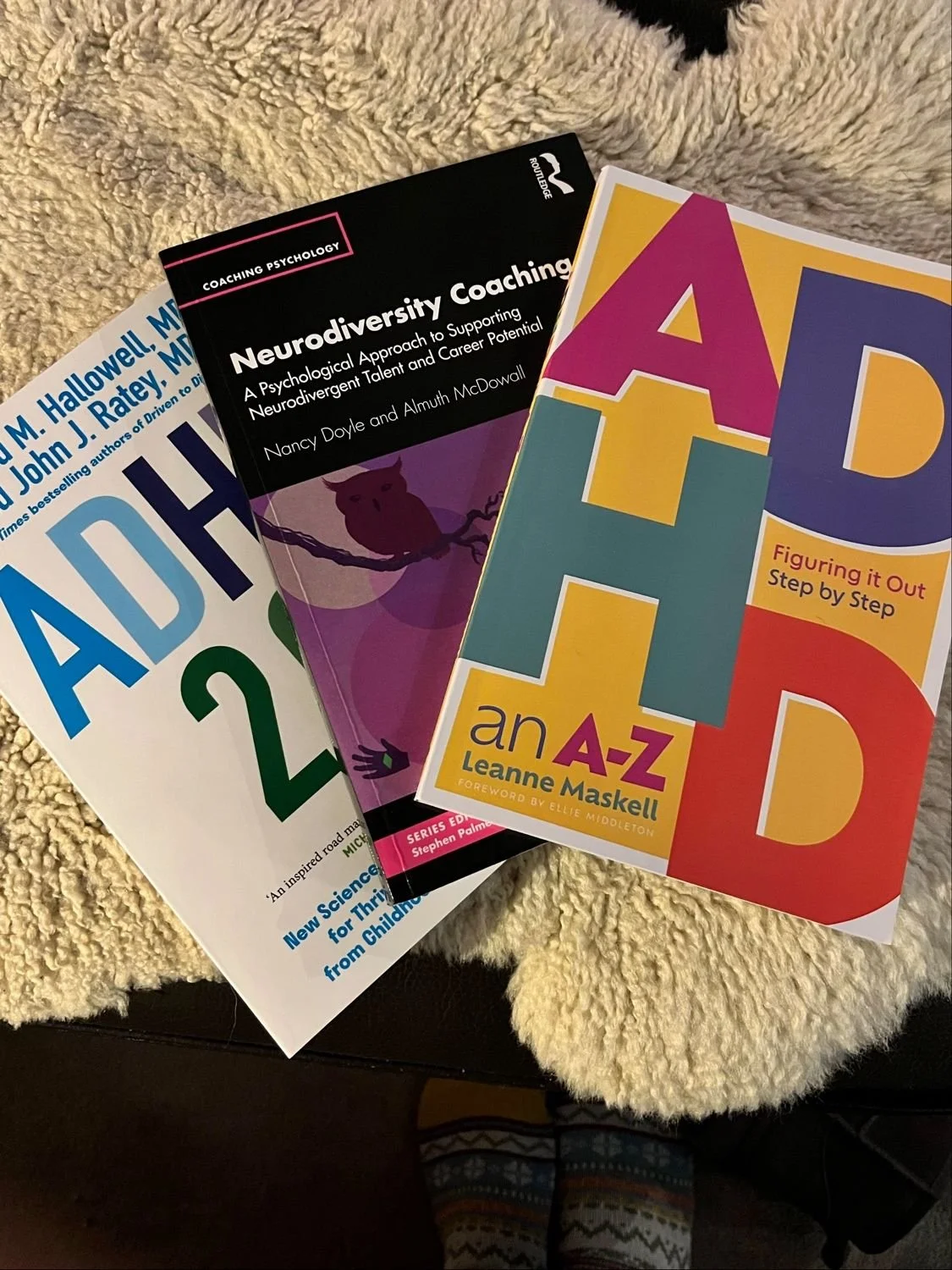
When Leanne first had coaching herself, she was asked to identify her goals and decide what she wanted to work towards - but that’s exactly what she was struggling with.
She had so many ideas competing for her attention that she couldn't work out which ones mattered, let alone arrive at a session with a clear agenda.
I could completely relate to that. For many people with ADHD, the difficulty isn’t a lack of ambition or ideas. It’s often the opposite: so many possibilities and competing priorities that finding a starting point feels overwhelming.
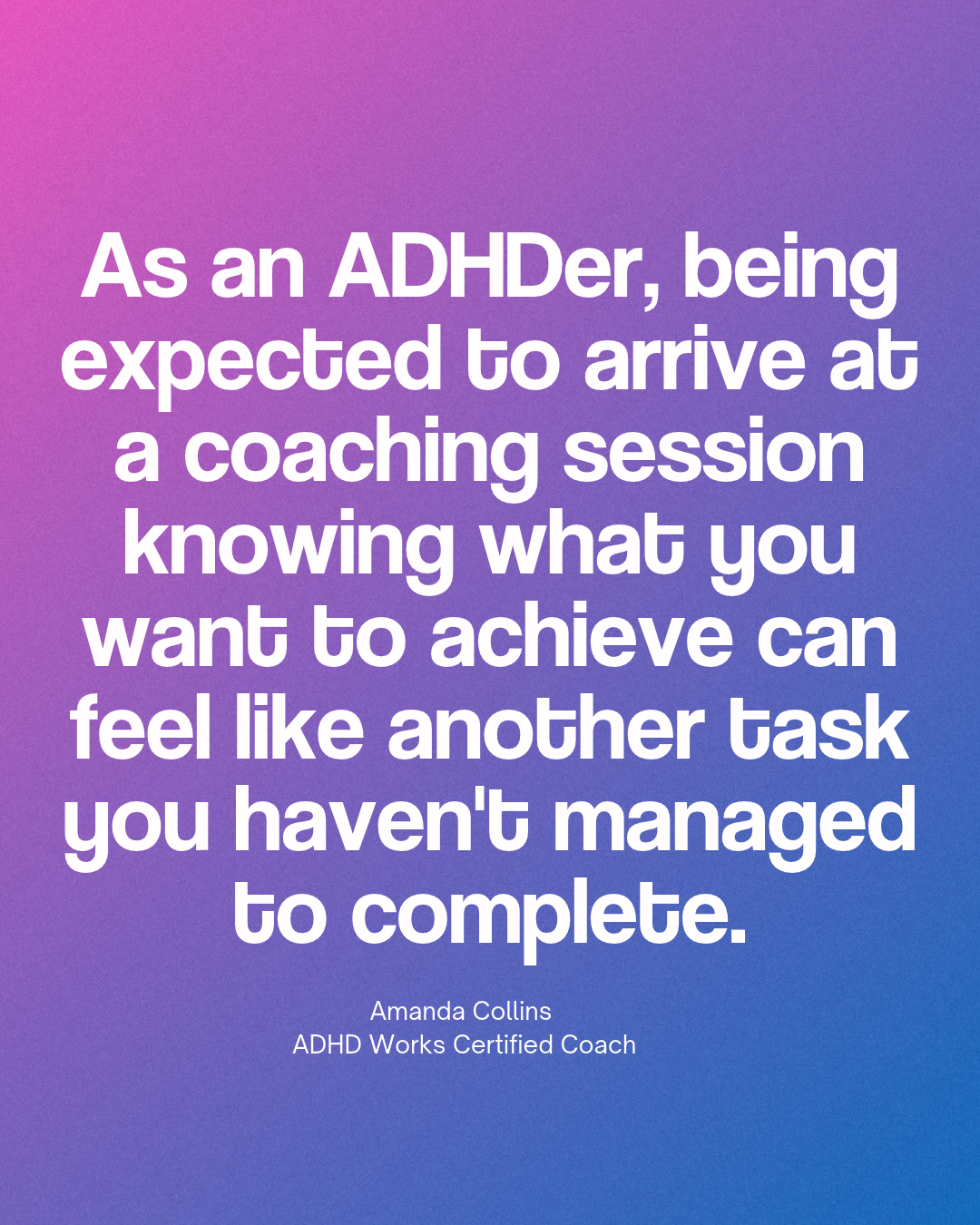
That doesn’t mean having an agenda or setting goals isn’t valuable. But someone who is too overwhelmed to know what help they need - only that they’re struggling - might feel like they’ve failed before they’ve even started.
Different people need different approaches, but we all benefit from flexibility, understanding and compassion.
Understanding ADHD changes the conversation
One of the things that attracted me to ADHD Works was its recognition that ADHD can affect far more than someone’s ability to concentrate.
Executive functioning difficulties can influence how we plan, prioritise, start tasks, manage time and regulate our emotions, and they look different for everyone.
Someone might excel at work but struggle with everyday administration. Another might have endless creative ideas but find it almost impossible to decide which one to pursue. Others might know exactly what needs doing but feel unable to start.
Without understanding the role ADHD can play, it's easy to misread what's happening.
What looks like procrastination might actually be task paralysis.
What looks like a lack of commitment might be overwhelm.
And what looks like someone constantly changing direction might be a genuine difficulty with prioritising competing ideas.
Understanding those differences doesn't mean making assumptions about someone's behaviour or attributing everything to ADHD. It means being curious, asking the right questions and recognising that the most effective approach might look different for each person.
Structure and flexibility can work together
This is why I particularly value the practical frameworks in the ADHD Works training. Leanne developed the Executive Functioning Coaching Framework from her own experience as both an ADHD coaching client and a coach.
Rather than expecting clients to arrive with a clear agenda, it provides areas to explore together, acting like an optional menu.
That structure can be reassuring when someone doesn’t know where to begin, but it’s ultimately there to support the conversation, not dictate it. There’s no rigid process. It adapts to the person, rather than expecting the person to adapt to it.
For me, this makes so much sense.
In my work with business owners, the most useful starting point has often been helping them untangle everything that’s going on. Coaching takes that further, helping someone develop their own understanding, choices and strategies.
And when ADHD is part of the picture, having both structure and flexibility can be particularly valuable.
Name it to tame it
Executive functioning isn’t just about planning and organising. We can have the best of intentions, but we don’t know what we don’t know - especially as ADHD can impact self-awareness.
The creative strategies many of us developed to survive in a world not built for our brains can be brilliant, but they can also hold us back without us even realising.
The framework explicitly accounts for this. Rather than relying on self-awareness alone, it uses quizzes and practical self-reflection tools such as structured worksheets to bring things to the surface, and then adds ADHD-specific information to help make sense of what comes up.
It was a real light-bulb moment to understand and break down my ADHD through a new, tangible lens, and to see how differently it showed up for everybody. Above all, it was fascinating to learn how behaviours I’d never even noticed were affecting my day-to-day life.
It wasn't about being told what was good or bad or diagnosing what I needed to change. It was about understanding myself better and having the opportunity to decide what, if anything, I wanted to do differently.
Exploring these practical tools in ADHD coaching is what helped me move from awareness to action, turning ‘I hadn’t realised that!’ into ‘now I know what to do about it.’
Progress doesn't always mean doing more
We live in a world that values productivity and measurable results. We’re encouraged to set goals, make action plans and keep moving forward. But for someone who’s already overwhelmed, another list of things to achieve isn’t always helpful.
Sometimes progress looks like recognising you’ve taken on too much, or learning to say no. Sometimes it’s learning to switch off, which can be surprisingly hard when ADHD makes the ‘easy’ things difficult and the difficult things easy.
Sometimes it’s understanding why something is difficult, rather than blaming yourself for struggling with it. And sometimes it’s simply feeling more comfortable with how your brain works.
As Leanne repeatedly emphasises, progress isn’t always linear. Traditional coaching often relies on SMART goals and measurable outcomes: setting a goal at the start, measuring success at the end, and leaving every session with actions to take away.
That structure can be helpful, but not every session needs a tick-box result, especially for those of us prone to masking. It’s easy to agree to actions just to look like we’re on track, then feel like we’ve failed at things we never even wanted to do in the first place.
Coaching shouldn’t automatically be about making someone more productive. It should be about helping them understand what they want and need, and supporting changes that are meaningful to them. Sometimes, feeling understood is the most productive thing of all.
Specialist knowledge and professional responsibility
Of course, understanding ADHD is only one part of being an effective ADHD coach. At its heart, all coaching requires communication skills, professional boundaries, ethical practice and knowing when someone may need support beyond coaching.
These considerations are especially important with it comes to ADHD, given the inherent vulnerability involved with processing the world differently to most - including with a coaching relationship itself. A coach needs to understand both what they can help with and where the boundaries of their expertise lie.
In theory, signposting and safeguarding sound simple. In practice, it’s much harder when the services you’d signpost to have years-long waiting lists, or when a client has already been let down by them. From medication shortages and disability discrimination to requests for reasonable adjustments and rejection sensitive dysphoria, the potential complexities are endless.
This is why ADHD Works training is a specialist pathway rather than an ICF-accredited qualification. Its core competencies explicitly reference and build on foundational coaching principles, including those of the International Coaching Federation and the Global Code of Ethics, but ICF accreditation requires training to be structured around ICF’s own competency model.
ADHD Works goes further, building its course around ADHD-specific frameworks such as the Executive Functioning Coaching Framework.
Its 46-page, publicly available Ethical Compliance Framework covers areas such as confidentiality, safeguarding, professional boundaries, contracting and coach wellbeing, with ADHD-specific realities in mind.
For me, understanding what the course covered, how its competencies were assessed and the ethical expectations involved was an important part of making an informed choice.
Good coaching takes knowledge, skills, ethics, self-awareness and ongoing development, none of which should stop once a course is complete. And just like our clients, every coach is different, so there’s no one-size-fits-all route to becoming a good one.
The value of lived experience
Having ADHD doesn’t automatically make someone a good ADHD coach. But used appropriately, lived experience can bring valuable understanding to the relationship.
Being diagnosed later in life changed how I see so many of my own experiences. Things I once saw as personal failings began to make sense, and I started to recognise patterns in how I worked, reacted and managed everyday life.
That doesn’t mean I know exactly how another person with ADHD feels, and I’m careful not to assume their experience is the same as mine. But I do know how powerful it was for me when someone listened without judgement, instead of making assumptions.
My own experience, alongside my years of supporting business owners, is part of what I bring to my coaching. ADHD Works encourages coaches to responsibly incorporate their lived experience into their practice, putting their own twist on the frameworks. We’re taught to understand how and why people choose an ADHD coach, and ultimately, it has very little to do with where we trained, and everything to do with who we are.
Why I'm glad I chose ADHD Works
Looking back, I’m glad I followed the route that felt right for the people I wanted to support. I wanted to understand ADHD beyond the familiar descriptions of distraction and hyperactivity, to gain practical tools for working with executive functioning, and to learn from someone who understood both the professional and personal realities of ADHD. That’s what I found.
The most important lesson for me has been this:
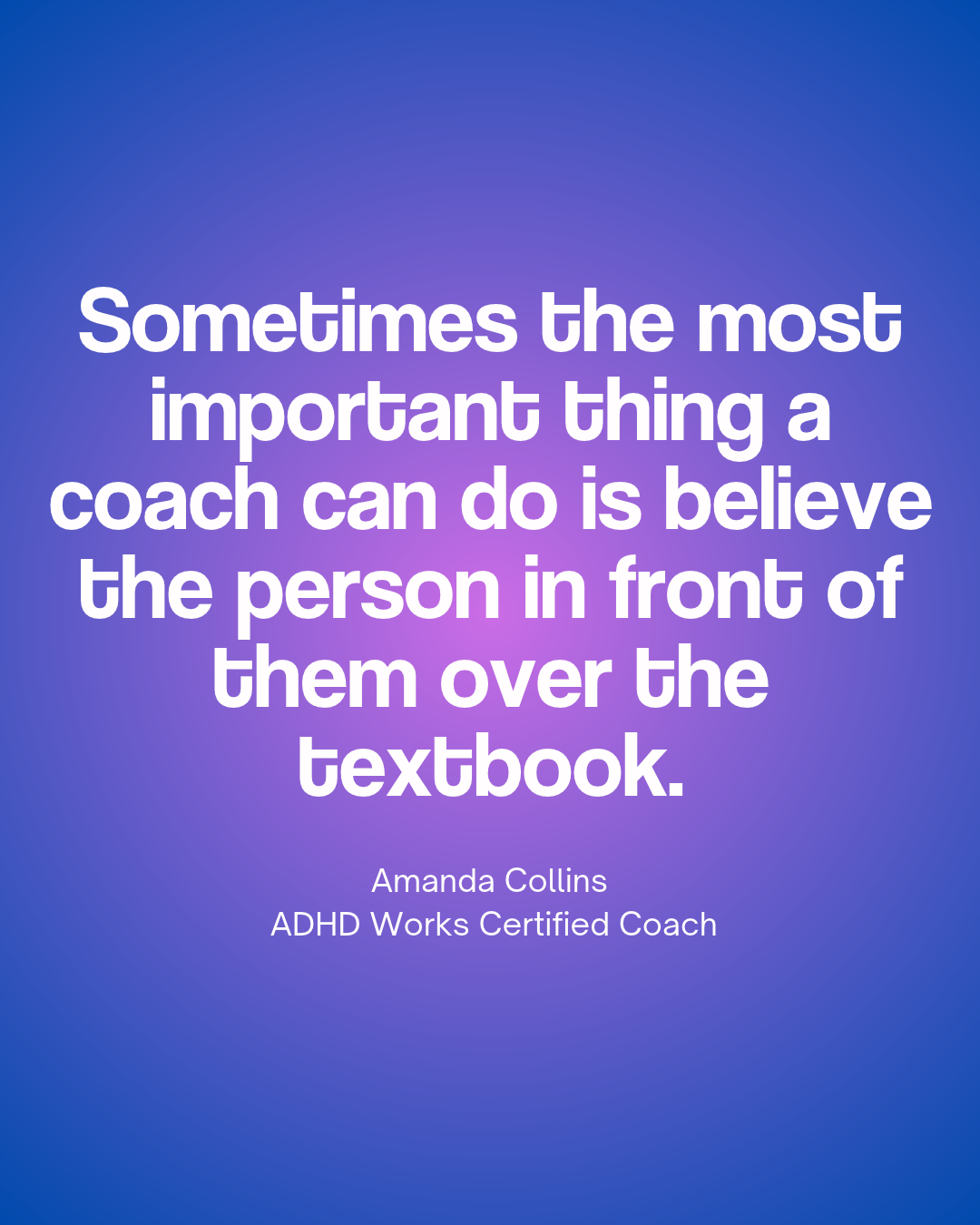
The person sitting in front of you matters more than the framework you’re using.
ABOUT THE AUTHOR
Amanda Collins is the founder of Creating Clarity Collective, providing ADHD coaching and executive support to individuals, founders and business owners.
Following her own later-life ADHD diagnosis, she trained with ADHD Works and brings years of experience supporting people to create clarity, structure and calm in their working lives.
Want support that works with your brain?
Answer 6 questions to be matched with an ADHD Works trained coach, or train to become one yourself.
Find your match Become a coach